

Selection
Every hide is inspected before cutting. A material enters the House only after it has been proven — the standard set in 1896 and never moved. Hides that pass are lotted and recorded; the lot follows the piece to its number.
Cutting and closing
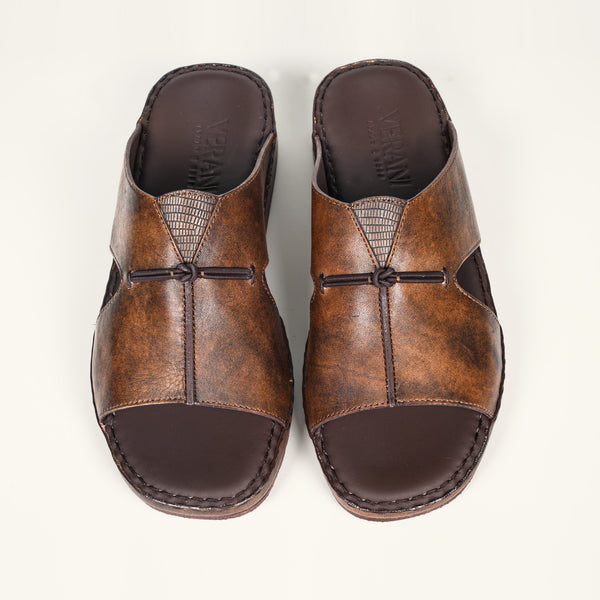
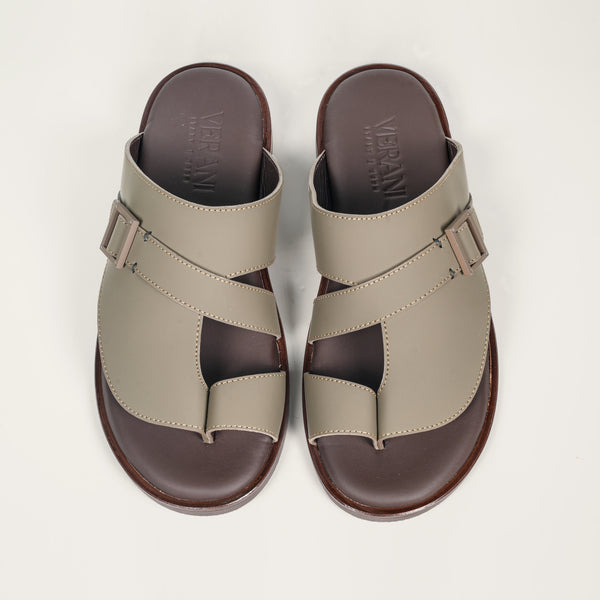
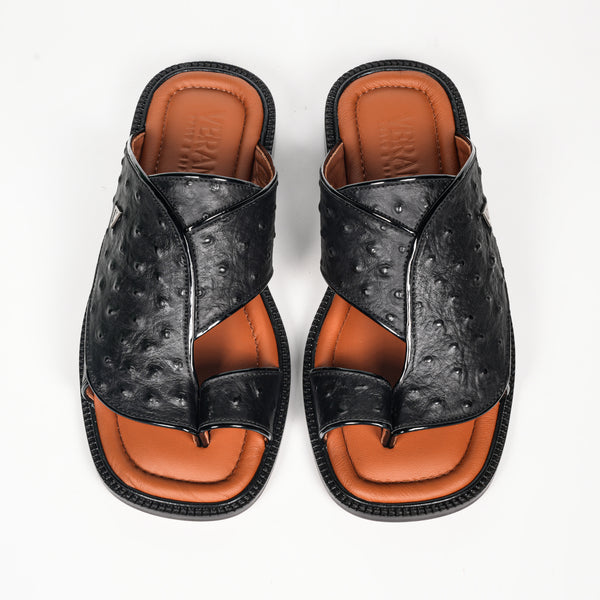
Panels are cut with the grain's stretch mapped to the sandal's flex, then closed — stitched and assembled — by hand. The strap geometry of the Arabic sandal leaves nowhere for error to hide: three straps, every edge visible.
Lasting and finishing
The upper is set over the last, married to its sole system, and finished: edges inked and burnished, surfaces dressed by hand. Nothing carries the name VERANI in its first version — construction methods are adopted only when the previous one has been exhausted.
The number
Finished pairs are inspected, numbered and entered in the House's record. The number ties the piece to its hides, its dates and its hands.