

What it is
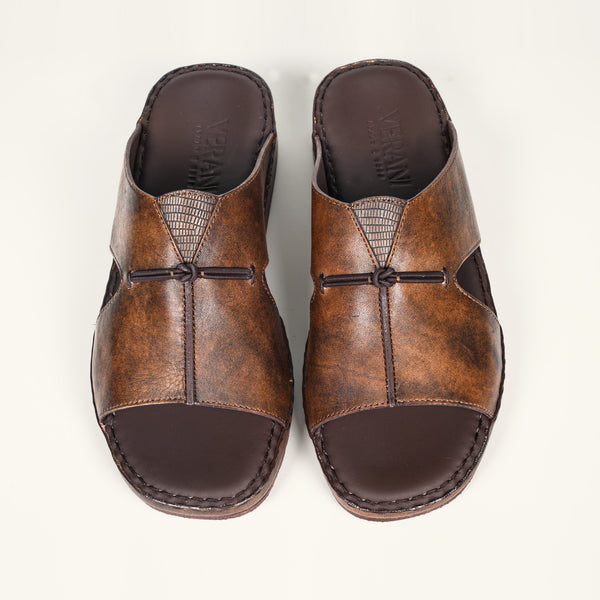
Museum Calf is a full-grain calfskin finished with repeated, hand-applied coats of aniline dye, worked unevenly by design. The result is a surface with real depth — a faint marbling, no two hides alike, that reads as cloud and shadow rather than pattern.
The finish originated in the great Italian tanneries as a way of giving smooth calf the depth of far older leathers. It remains one of the most labour-intensive finishes in the trade.
Why the House uses it
Museum Calf rewards time. The marbled finish deepens with wear and polish rather than dulling, which suits a house that expects its work to be kept. VERANI reserves it for pieces where the leather itself is the design — unbroken panels, minimal hardware, nothing to interrupt the surface.
How it ages
With wear, the high points of the marbling burnish and the depth increases. Scuffs feed the character rather than fighting it. A Museum Calf piece at five years is generally handsomer than at five days.