

The form
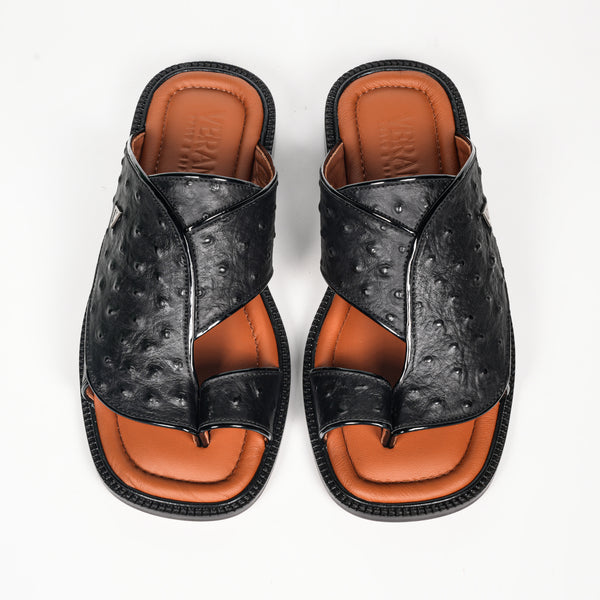
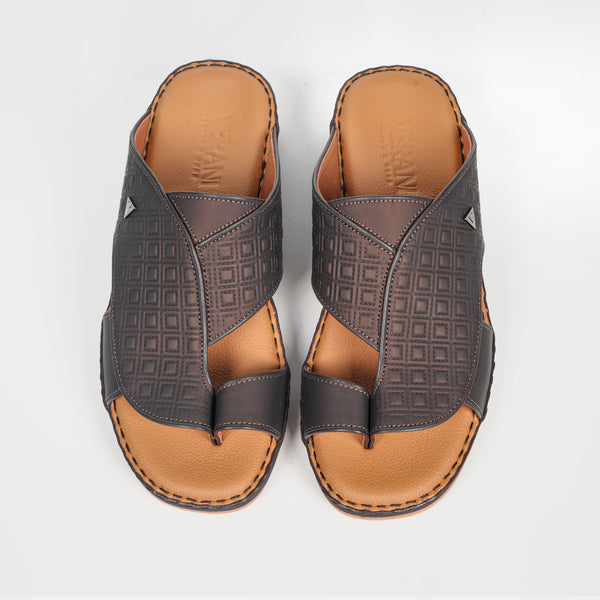
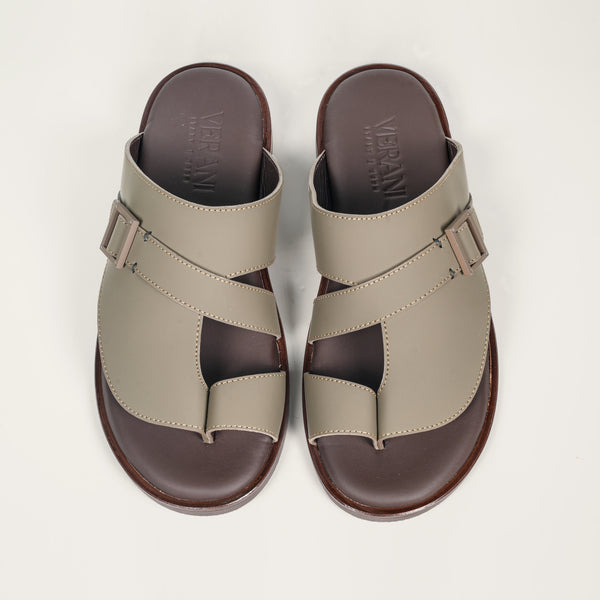
The Arabic sandal — the sandal of the Gulf, worn with the dishdasha and thobe — is among the oldest continuously worn footwear forms in the world. Its geometry is fixed by function and code: the broad forefoot strap, the toe post, the low profile that enters the majlis correctly. It is not designed; it is inherited, and refined.
How to judge one
Judge an Arabic sandal where error cannot hide: the edges, the stitch density, the strap's set against the foot, the footbed's behaviour after the tenth hour. Pattern and shine are the surface; construction is the sandal.
The House's position
VERANI has made this form for decades — Italian standards applied to a Gulf inheritance. The House does not modernise the form. It builds it properly.
Choosing a first piece
A first VERANI is usually CASATO for the plainest register or SOVRANO for the fullest construction. The Concierge advises on fit before purchase; sizes exchange without difficulty.